2,400 years old.
Still the most valuable thinking tool nobody teaches children.
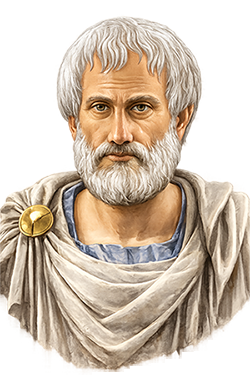
Aristotle described it in 350 BC. Elon Musk rediscovered it and used it to build Tesla and SpaceX. Steve Jobs used it to decide what a phone could be. Reed Hastings used it to dismantle how films reach an audience.
It is not a business technique. It is a way of thinking — and children are naturally better at it than adults, right up until school teaches it out of them.
Three steps. That is genuinely all it is.
Everything else written about First Principles is elaboration on these three moves.
Take the problem apart. Separate what is actually, provably true from what everyone simply assumes because that is how it has always been done.
Get down to the bedrock. What is left when every assumption has been removed? Usually far less than anyone expected — and that space is the opportunity.
Construct the answer upward from what is true, instead of copying a slightly better version of what already exists. This is where new things come from.
Almost everyone reasons by analogy: “this is how it is normally done, so I will do a version of that.”
First Principles is refusing to start there.

The battery that everyone said was impossible
The most quoted example of the method, and the clearest to explain to a twelve-year-old.
Battery packs cost around $600 per kilowatt-hour. They always had. Therefore electric cars would always be too expensive to compete. Everyone in the industry accepted this.
What is a battery actually made of? Cobalt, nickel, aluminium, carbon, some polymers, a steel can. And what do those raw materials cost on the commodity market?
The raw materials cost a small fraction of the finished pack. The rest was how batteries had always been assembled — not physics. So the assembly was the problem to solve.
The price was never a law of nature. It was a habit that nobody had questioned.

Why did anyone have to drive to a shop for a film?
The same method applied to something entirely non-technical.
Watching a film means going to a rental shop, choosing from what is on the shelf, and returning it by a deadline or paying a fine. That was simply what films were.
What does a person actually want? To watch a film they choose, when they want to. The shop, the shelf, the drive and the late fee are not part of that want.
Remove every part that was not the actual want. First by post with no late fees. Then by streaming, with no physical object at all.
Blockbuster was not beaten by a better shop. It was beaten by someone who asked why a shop was needed at all.


Almost everyone reasons by analogy.
Almost nobody reasons from first principles.
Reasoning by analogy is fast, safe and usually adequate. It is also why most products, businesses and ideas end up being slightly rearranged versions of what already existed.
The two approaches look identical from the outside until they produce completely different answers. Here is the same problem, thought through both ways.
“How is this normally done?”
Start from what exists. Copy the shape. Improve one detail. Ship something familiar.
“What is actually true here?”
Start from the problem. Ask who has it and why nothing solves it properly. Build upward from there.
Children are already good at this. We are trying to stop them losing it.
Ask a group of ten-year-olds how to solve a problem and you will hear answers no adult in the room would have offered. Ask the same question at thirty and you get variations of what already exists, delivered with more confidence and less imagination.
The difference is accumulated assumptions. Every year we absorb a little more of “that is not how it is done”, until eventually we stop noticing there is a box at all. It is not a failure of intelligence. It is the entirely normal cost of learning how the world works.
Between 10 and 15 that box is still under construction. Teaching First Principles at this age is not about giving a child a new skill — it is about naming an instinct they already have, so they recognise it and keep it when the assumptions start arriving.
How your child actually learns it
Not as a lecture about Aristotle. As a tool they apply to the business they have already built.
They arrive with something to apply it to
First Principles is taught in Cycle 3, deliberately. By then your child has already built a business, named it, priced it and published it. The method has something real to work on rather than being an abstract exercise.
They meet Aristotle, then Musk
The origin first — where the idea came from and what Aristotle meant by it. Then the modern proof: Tesla, SpaceX, Apple, Netflix. Children take a method far more seriously once they know it built things they recognise.
They take their own business apart
This is the uncomfortable part and the most valuable. They list every assumption inside their own idea — who the customer is, what the price should be, why it works the way it does — and test which ones are actually true.
Andrew keeps asking the harder question
The AI mentor is built to hand thinking back rather than supply answers. When a child says “everyone does it this way”, Andrew asks why. That single question, repeated over months, is the whole method.
They rebuild and defend it
The business plan and the pitch come after this. Your child has to explain not just what their business is, but why it is built the way it is — and answer someone asking why it could not be done differently.

Where the method shows up next
This is the reason we consider it the single most valuable thing on the platform.
Mathematics
A child who asks “why does this formula work?” instead of memorising it understands mathematics rather than performing it.
Science
First Principles is essentially the scientific method applied to everyday problems. Children who have one recognise the other immediately.
Debate and argument
Separating what is true from what is merely repeated is the entire skill of arguing well — and of recognising when someone is arguing badly.
Reading the world critically
A generation raised on algorithmic feeds needs the habit of asking “is that actually true, or is it just repeated often?” more than any generation before it.
Decisions with no precedent
Every important decision in life is one nobody has made in exactly those circumstances before. Analogy runs out. This does not.
Working alongside AI
AI is extraordinarily good at producing variations on what already exists. Knowing how to ask a question nobody has asked is what remains genuinely human.
Everything else on the platform is a vehicle for this.
The business, the canvas, the pitch, the network — all of it is genuinely valuable, and all of it exists partly to give a child something real to apply this method to.
Most of our students will not become founders. We say that plainly on every page. But every one of them will spend their life meeting problems with no obvious answer — and the ones who can strip a problem to what is true and rebuild from there will meet those problems very differently.
That is the actual product. The business is how we teach it.
What parents ask about the method
Answered directly.
It would be if we taught it as philosophy. We do not. It is taught in Cycle 3, after your child has spent two years building an actual business — so the method is applied to something they made and care about. The concept itself is genuinely simple: separate what is true from what everyone assumes, then build from the true part.
Because a child needs something to apply it to. Teaching First Principles to someone with no business, no assumptions of their own to test and nothing at stake produces a definition they can recite and nothing more. By Cycle 3 they have a business full of untested assumptions — and the method has real work to do.
The method predates Musk by 2,400 years and would be equally valid if he had never used it. He is included because children recognise Tesla and SpaceX, which makes the method concrete rather than academic. The philosophical origin is Aristotle, and that is how it is introduced in the curriculum.
The most common thing parents report is that their child starts asking “but why is it like that?” about things that were previously accepted without question — school rules, the way a shop is arranged, why something costs what it costs. That habit is the method working. Whether they call it First Principles is beside the point.
Yes, and it takes about ten minutes to understand. Our free parent webinar has a lesson dedicated to it, with a simple exercise you can do at the dinner table — take something your child accepts as fixed and ask “why?” five times. See the free webinar →
It makes them ask better questions, which some parents describe as mildly relentless for the first few months. The distinction we teach is between questioning an idea and challenging a person — and children pick that up quickly, particularly once they have had their own idea questioned in a pitch.
Strip. Find. Rebuild.
Aristotle described it. Musk, Jobs and Hastings used it. Almost no school teaches it. Your child can learn it at ten — before the assumptions arrive.
No credit card · GDPR & COPPA compliant · Cancel any time · Or ask us a question first
Where it sits in the programme See the full curriculum →
How the journey begins The founder mindset →
Who asks the harder questions Meet Andrew, the AI companion →
Learn the method yourself, free See the parent webinar →